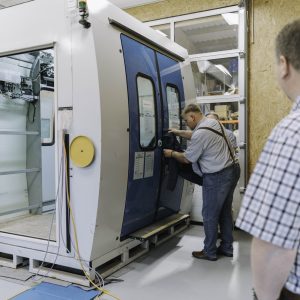
Principles of rail transport and fundamentals of railroad technology
Description
The course offers a structured and easy-to-understand introduction to the principles of
rail transport and the technical and operational fundamentals of the railroads. It addresses the overall railroad system at
and offers the opportunity to change perspective and thus to classify
responsibility for one’s own activities in the overall context.
You will learn the principles and basics of railroads. You will also acquire
reliable knowledge for later application in practice. The basics of understanding
clearance gauge and track will be a constant companion later on.
How a train behaves on the track, how brakes and their air system interact functionally
and which rolling stock is used is of fundamental importance for the interrelated planning of
rail traffic.
Learning objectives
The participants:
understand the objectives and requirements of the Interoperability Directive and can explain its significance for cross-border rail transport.
can explain the purpose of the Technical Specifications for Interoperability (TSI) and their application to various subsystems and components of the rail system.
know the legal framework conditions for railroad safety and the placing on the market of rail vehicles and can apply these to practical examples.
can explain the common safety method (CSM) and the criteria for significance assessment and apply them to specific risk analyses.
know the main German laws, in particular the General Railway Act (AEG) and the Railway Construction and Operating Regulations (EBO), and can apply these to various scenarios in railroad operations.
understand the requirements of the Commissioning Authorization Ordinance (EIGV) and can explain their implementation in the approval process.
know the roles and responsibilities of the various players in the approval and security process (NoBo, DeBo, AsBo, ERA, NSA) and can describe their cooperation.
understand the importance of requirements capture in the railroad sector and can systematically capture, document and check requirements.
can explain the basics of the safety regulation vehicle (SIRF) and describe its role in the approval and safety process.
can analyze and explain the differences and similarities between the assessment and approval processes in Germany and other European countries.
Costs
EUR 2.310.- excl. tax.
(EUR 2.749,- incl. VAT)
Training costs: EUR 1,518 (plus VAT) and campus flat rate: EUR 792 (plus VAT)
Contains:
Two overnight stays in a unique atmosphere incl. breakfast
Catering during the training incl. lunch and non-alcoholic drinks
Networking in our lounge
Joint learning evenings incl. dinner and non-alcoholic drinks
If applicable, one joint learning evening incl. dinner and non-alcoholic drinks
Supervision by the training manager during the learning evenings
(EUR 2.749,- incl. VAT)
Training costs: EUR 1,518 (plus VAT) and campus flat rate: EUR 792 (plus VAT)
Contains:
Two overnight stays in a unique atmosphere incl. breakfast
Catering during the training incl. lunch and non-alcoholic drinks
Networking in our lounge
Joint learning evenings incl. dinner and non-alcoholic drinks
If applicable, one joint learning evening incl. dinner and non-alcoholic drinks
Supervision by the training manager during the learning evenings
Learning objectives
The course offers a structured and easy-to-understand introduction to the principles of
rail transport and the technical and operational fundamentals of the railroads. It addresses the overall railroad system at
and offers the opportunity to change perspective and thus to classify
responsibility for one’s own activities in the overall context.
You will learn the principles and basics of railroads. You will also acquire
reliable knowledge for later application in practice. The basics of understanding
clearance gauge and track will be a constant companion later on.
How a train behaves on the track, how brakes and their air system interact functionally
and which rolling stock is used is of fundamental importance for the interrelated planning of
rail traffic.
Learning objectives
The participants:
understand the objectives and requirements of the Interoperability Directive and can explain its significance for cross-border rail transport.
can explain the purpose of the Technical Specifications for Interoperability (TSI) and their application to various subsystems and components of the rail system.
know the legal framework conditions for railroad safety and the placing on the market of rail vehicles and can apply these to practical examples.
can explain the common safety method (CSM) and the criteria for significance assessment and apply them to specific risk analyses.
know the main German laws, in particular the General Railway Act (AEG) and the Railway Construction and Operating Regulations (EBO), and can apply these to various scenarios in railroad operations.
understand the requirements of the Commissioning Authorization Ordinance (EIGV) and can explain their implementation in the approval process.
know the roles and responsibilities of the various players in the approval and security process (NoBo, DeBo, AsBo, ERA, NSA) and can describe their cooperation.
understand the importance of requirements capture in the railroad sector and can systematically capture, document and check requirements.
can explain the basics of the safety regulation vehicle (SIRF) and describe its role in the approval and safety process.
can analyze and explain the differences and similarities between the assessment and approval processes in Germany and other European countries.
Costs
EUR 2.310.- excl. tax.
(EUR 2.749,- incl. VAT)
Training costs: EUR 1,518 (plus VAT) and campus flat rate: EUR 792 (plus VAT)
Contains:
Two overnight stays in a unique atmosphere incl. breakfast
Catering during the training incl. lunch and non-alcoholic drinks
Networking in our lounge
Joint learning evenings incl. dinner and non-alcoholic drinks
If applicable, one joint learning evening incl. dinner and non-alcoholic drinks
Supervision by the training manager during the learning evenings
(EUR 2.749,- incl. VAT)
Training costs: EUR 1,518 (plus VAT) and campus flat rate: EUR 792 (plus VAT)
Contains:
Two overnight stays in a unique atmosphere incl. breakfast
Catering during the training incl. lunch and non-alcoholic drinks
Networking in our lounge
Joint learning evenings incl. dinner and non-alcoholic drinks
If applicable, one joint learning evening incl. dinner and non-alcoholic drinks
Supervision by the training manager during the learning evenings
Costs
The course offers a structured and easy-to-understand introduction to the principles of
rail transport and the technical and operational fundamentals of the railroads. It addresses the overall railroad system at
and offers the opportunity to change perspective and thus to classify
responsibility for one’s own activities in the overall context.
You will learn the principles and basics of railroads. You will also acquire
reliable knowledge for later application in practice. The basics of understanding
clearance gauge and track will be a constant companion later on.
How a train behaves on the track, how brakes and their air system interact functionally
and which rolling stock is used is of fundamental importance for the interrelated planning of
rail traffic.
Learning objectives
The participants:
understand the objectives and requirements of the Interoperability Directive and can explain its significance for cross-border rail transport.
can explain the purpose of the Technical Specifications for Interoperability (TSI) and their application to various subsystems and components of the rail system.
know the legal framework conditions for railroad safety and the placing on the market of rail vehicles and can apply these to practical examples.
can explain the common safety method (CSM) and the criteria for significance assessment and apply them to specific risk analyses.
know the main German laws, in particular the General Railway Act (AEG) and the Railway Construction and Operating Regulations (EBO), and can apply these to various scenarios in railroad operations.
understand the requirements of the Commissioning Authorization Ordinance (EIGV) and can explain their implementation in the approval process.
know the roles and responsibilities of the various players in the approval and security process (NoBo, DeBo, AsBo, ERA, NSA) and can describe their cooperation.
understand the importance of requirements capture in the railroad sector and can systematically capture, document and check requirements.
can explain the basics of the safety regulation vehicle (SIRF) and describe its role in the approval and safety process.
can analyze and explain the differences and similarities between the assessment and approval processes in Germany and other European countries.
Costs
EUR 2.310.- excl. tax.
(EUR 2.749,- incl. VAT)
Training costs: EUR 1,518 (plus VAT) and campus flat rate: EUR 792 (plus VAT)
Contains:
Two overnight stays in a unique atmosphere incl. breakfast
Catering during the training incl. lunch and non-alcoholic drinks
Networking in our lounge
Joint learning evenings incl. dinner and non-alcoholic drinks
If applicable, one joint learning evening incl. dinner and non-alcoholic drinks
Supervision by the training manager during the learning evenings
(EUR 2.749,- incl. VAT)
Training costs: EUR 1,518 (plus VAT) and campus flat rate: EUR 792 (plus VAT)
Contains:
Two overnight stays in a unique atmosphere incl. breakfast
Catering during the training incl. lunch and non-alcoholic drinks
Networking in our lounge
Joint learning evenings incl. dinner and non-alcoholic drinks
If applicable, one joint learning evening incl. dinner and non-alcoholic drinks
Supervision by the training manager during the learning evenings
Our campus
The course offers a structured and easy-to-understand introduction to the principles of
rail transport and the technical and operational fundamentals of the railroads. It addresses the overall railroad system at
and offers the opportunity to change perspective and thus to classify
responsibility for one’s own activities in the overall context.
You will learn the principles and basics of railroads. You will also acquire
reliable knowledge for later application in practice. The basics of understanding
clearance gauge and track will be a constant companion later on.
How a train behaves on the track, how brakes and their air system interact functionally
and which rolling stock is used is of fundamental importance for the interrelated planning of
rail traffic.
Learning objectives
The participants:
understand the objectives and requirements of the Interoperability Directive and can explain its significance for cross-border rail transport.
can explain the purpose of the Technical Specifications for Interoperability (TSI) and their application to various subsystems and components of the rail system.
know the legal framework conditions for railroad safety and the placing on the market of rail vehicles and can apply these to practical examples.
can explain the common safety method (CSM) and the criteria for significance assessment and apply them to specific risk analyses.
know the main German laws, in particular the General Railway Act (AEG) and the Railway Construction and Operating Regulations (EBO), and can apply these to various scenarios in railroad operations.
understand the requirements of the Commissioning Authorization Ordinance (EIGV) and can explain their implementation in the approval process.
know the roles and responsibilities of the various players in the approval and security process (NoBo, DeBo, AsBo, ERA, NSA) and can describe their cooperation.
understand the importance of requirements capture in the railroad sector and can systematically capture, document and check requirements.
can explain the basics of the safety regulation vehicle (SIRF) and describe its role in the approval and safety process.
can analyze and explain the differences and similarities between the assessment and approval processes in Germany and other European countries.
Costs
EUR 2.310.- excl. tax.
(EUR 2.749,- incl. VAT)
Training costs: EUR 1,518 (plus VAT) and campus flat rate: EUR 792 (plus VAT)
Contains:
Two overnight stays in a unique atmosphere incl. breakfast
Catering during the training incl. lunch and non-alcoholic drinks
Networking in our lounge
Joint learning evenings incl. dinner and non-alcoholic drinks
If applicable, one joint learning evening incl. dinner and non-alcoholic drinks
Supervision by the training manager during the learning evenings
(EUR 2.749,- incl. VAT)
Training costs: EUR 1,518 (plus VAT) and campus flat rate: EUR 792 (plus VAT)
Contains:
Two overnight stays in a unique atmosphere incl. breakfast
Catering during the training incl. lunch and non-alcoholic drinks
Networking in our lounge
Joint learning evenings incl. dinner and non-alcoholic drinks
If applicable, one joint learning evening incl. dinner and non-alcoholic drinks
Supervision by the training manager during the learning evenings